
Nantu Forest
USD 300 / person
(minimum 2 person)
(image credit: Michel Gunther)
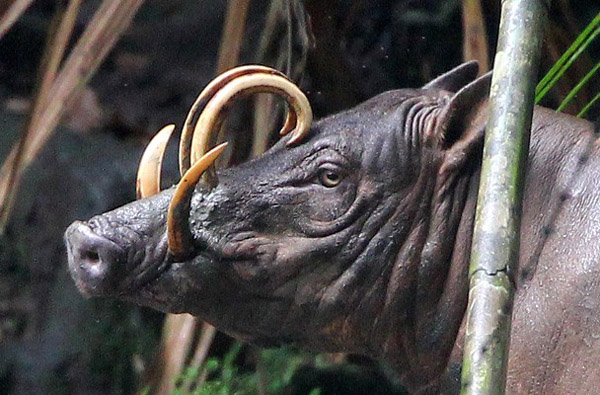
Babirusa
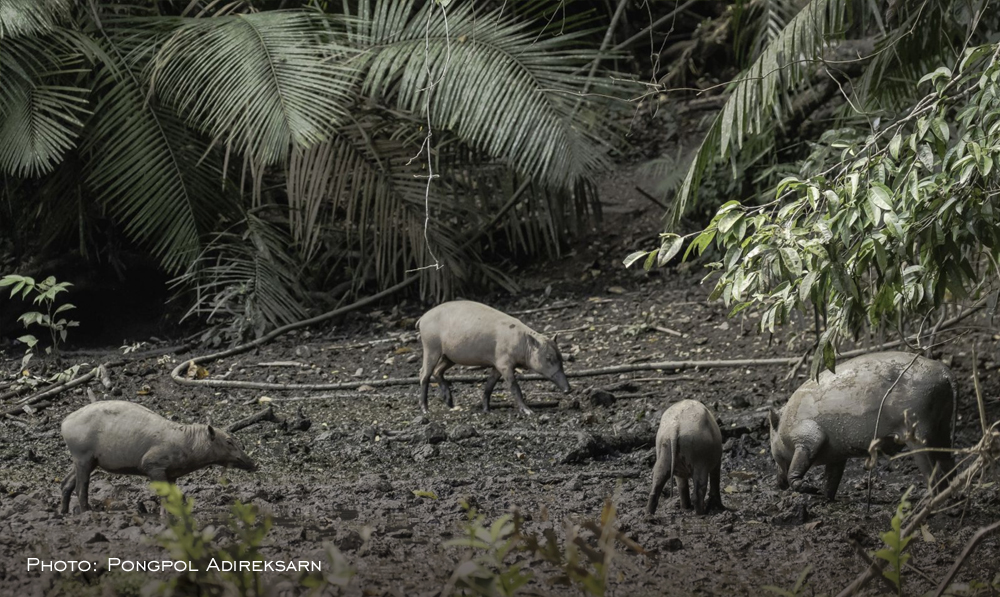
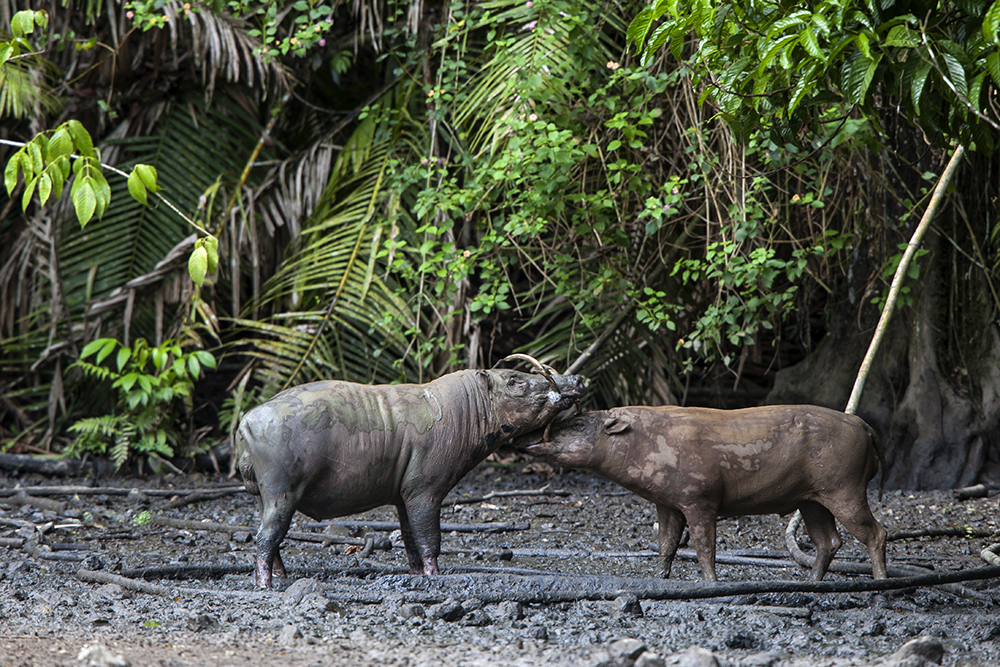
The babirusas, also called deer-pig (Indonesian: babirusa) are a genus, Babyrousa, in the swine family found in Wallacea, or specifically the Indonesian islands of Sulawesi, Togian, Sula and Buru. All members of this genus were considered part of a single species until 2002 as the babirusa (Babyrousa babyrussa), but following the split into several species, this scientific name is restricted to the Buru babirusa from Buru and Sula islands, whereas the best-known species, the North Sulawesi babirusa, is named Babyrousa celebensis. The remarkable “prehistoric” appearance of these mammals is largely due to the prominent upwards incurving canine tusks of the males, which actually pierce the flesh in the snout.
The North Sulawesi babirusa (Babyrousa celebensis) has a head-and-body length of 85–110 cm (33–43 in) and weighs up to 100 kg (220 lb). It is virtually hairless (easily revealing its greyish skin), and the tail-tuft is also nearly hairless. In males, the relatively long and thick upper canines are strongly curved. They emerge through the roof of the snout, while the long lower canines emerge through the side of the mouth. The upper canines can grow backwards in a curve until they penetrate the skull of the male babirusa. In females, the canines are far shorter and typically do not protrude. In comparison, the Buru babirusa has relatively long, thick body hair, a well-developed tail-tuft, and relatively short and slender upper canines in males, while the Togian babirusa is larger, has a relatively well-developed tail-tuft, and the upper canines of the male are “short, slender, rotated forwards, and always converge”
The common and scientific names are various transcriptions of its local name, which literally translated means “deer-pig” (from Indonesian babi “pig” + rusa “deer” – see also Javan Rusa) in reference to the huge tusks of the male suggestive of a deer’s antlers.
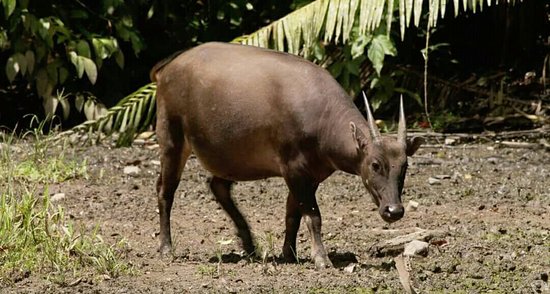
The Anoa
The Anoa is the world’s smallest species of wild cattle and is found only on the island of Sulawesi. This species is currently classed into two types (lowland and mountain Anoa), although there is still some debates about the taxonomy.
Anoa is listed as an endangered species by the International Union for the Conservation of Nature and Natural Resources (IUCN), which means they face a very high risk of extinction in the wild. They are also listed in Appendix I by the Convention on International Trade in Endangered Species of Wild Fauna and Flora (CITES), which therefore prohibits international trade in these species.
The current wild population of Anoa is estimated to be less than 2,500 mature individuals. Their population is declining due to a combination of ongoing habitat loss and bushmeat hunting across Sulawesi. Anoas are a protected species under Indonesian law and are also featured on the national list of species of high conservation priority, hence this ex-situ conservation breeding program is intended to help increase the anoa population.

Unlike domesticated cattle, the Anoa is an aggressive animal and has unique oestrus cycle, which is difficult to observe. The silent oestrus cycle and wild behaviour of Anoa are among the challenges in breeding management and ex situ conservation methods of Anoa.
--------


- homestay
- Nantu forest: Deer-pig wallow
- Anoa shelter & other wildlife's
- Adudu waterfall
Fitur Calendar Trip untuk saat ini masih belum aktif



PERKENALKAN
TANAH KELAHIRANMU
PADA DUNIA…